Trappist or abbey beer: what is actually the difference?
There are currently eight monasteries worldwide that are allowed to sell their beer with the Authentic Trappist Product label. Five are located in Belgium, one in Italy, one in England, and one in the Netherlands: the Koningshoeven Abbey in Berkel-Enschot, where La Trappe originates. Until last year, our country had a second one.
Yet the word abbey appears on many more labels, including in our shop. Trappist, abbey beer, monks' beer, tripel: they all sound like monastery walls, but they mean nowhere near the same thing. Here's the thing.
Who are those Trappists, actually?
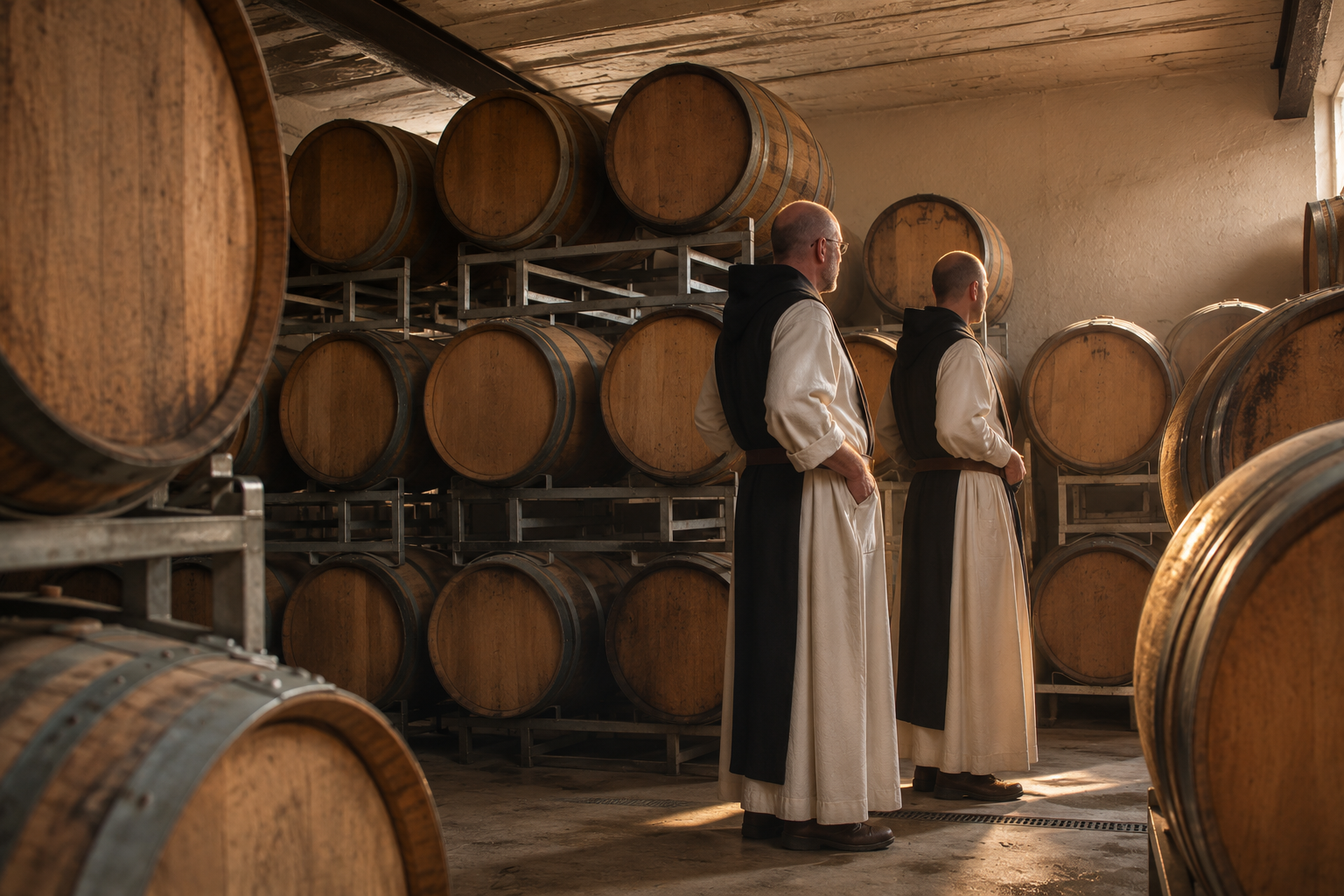
Trappists are monks of a strict branch of the Cistercians. Their name comes from the French monastery of La Trappe. In 1664, the abbot there felt that his order had become too lax and introduced stricter rules.
They live according to the Rule of Benedict, in which working with your hands has a fixed place. A monastery must sustain itself. At one abbey, this is done with cheese or bread; at another, with beer. In Westmalle, Belgium, the monks brewed their first beer as early as August 1, 1836.
When is Trappist allowed on the label?
When Trappist beer became popular, ordinary breweries also put the word on their bottles. In 1962, the monks in Ghent took legal action against this. In 1997, eight Trappist abbeys jointly founded the International Trappist Association to protect their name against commercial companies.
The association awards the label under three conditions. The beer is brewed in the immediate vicinity of the abbey, under the supervision of the monks or sisters themselves. And the proceeds are primarily for the livelihood of the community; whatever remains goes to charitable causes.
Just how strict that is became apparent last year in Zundert. At the end of August 2025, the last brothers left the abbey there, and with the monastery, the brewery closed as well. Without monks, there is no supervision, and therefore no more Trappist beer. Since then, La Trappe has been the only Trappist in the Netherlands.
Abbey beer: the name of a monastery, the beer of a brewer
Abbey beer is a broader definition: beer associated with an existing or defunct abbey, but produced by a conventional brewery. In Belgium, brewers introduced the "Recognized Belgian Abbey Beer" logo in 1999. To qualify, there must be a genuine link to an abbey, the monastery has control over a portion of sales, and a share of the profits goes to the abbey or to charitable causes. The best-known example is Leffe, which currently comes from the stables of brewing giant AB InBev.
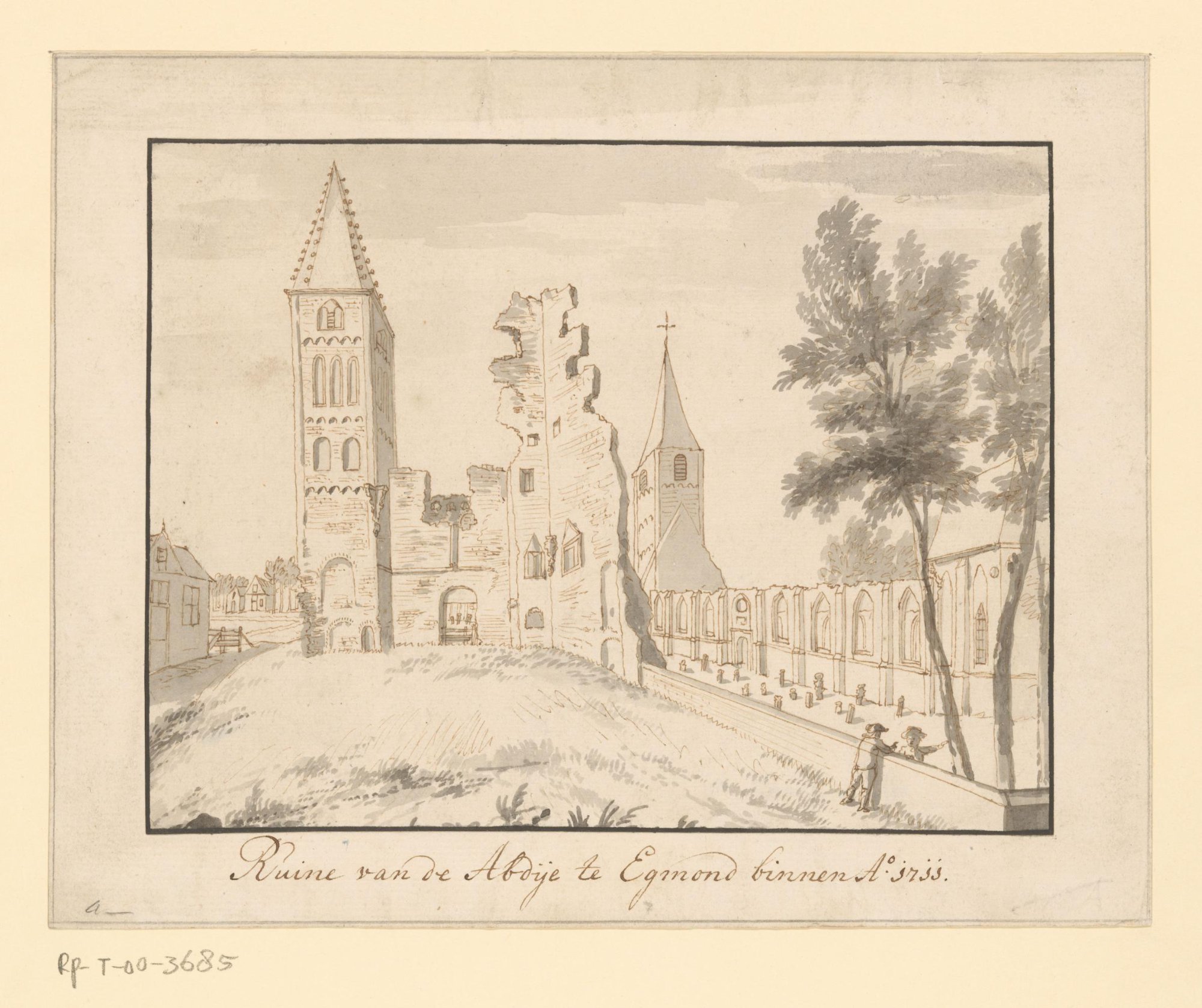
A fine Dutch example comes from Egmond. According to tradition, the abbey there was founded around the year 920 and was the oldest monastery in Holland. In 1573, the Geuzen leader Diederik Sonoy had it destroyed, just before the Spanish siege of Alkmaar. For centuries, only a ruin remained, as shown in the drawing below. It was not until the 1930s that Benedictines came to live there again.
Since 2010, Sancti Adalberti has been brewing beer in collaboration with that abbey, initially at other breweries and since 2018 in its own brewery. The beers are organic, a little water from the abbey's spring goes into them, and a portion of the proceeds goes to the abbey. Among those available with us are the Sancti Adalberti Tripel (7.5 percent), golden with citrus and herbs, the light, citrus-fresh Sancti Adalberti Blond and the Sancti Adalberti Quadrupel (10 percent), with malt, caramel and a hint of liquorice.
Double, triple, and quadruple: monastery names for everyone
The style names you see on our site also originate from the abbey. In 1856, Westmalle brewed a strong brown beer that is considered the first dubbel. In the 1930s, the golden-blonde Westmalle Tripel was added, forming the basis of the entire style. And in 1991, La Trappe was the first brewery to name its strongest beer a quadrupel.
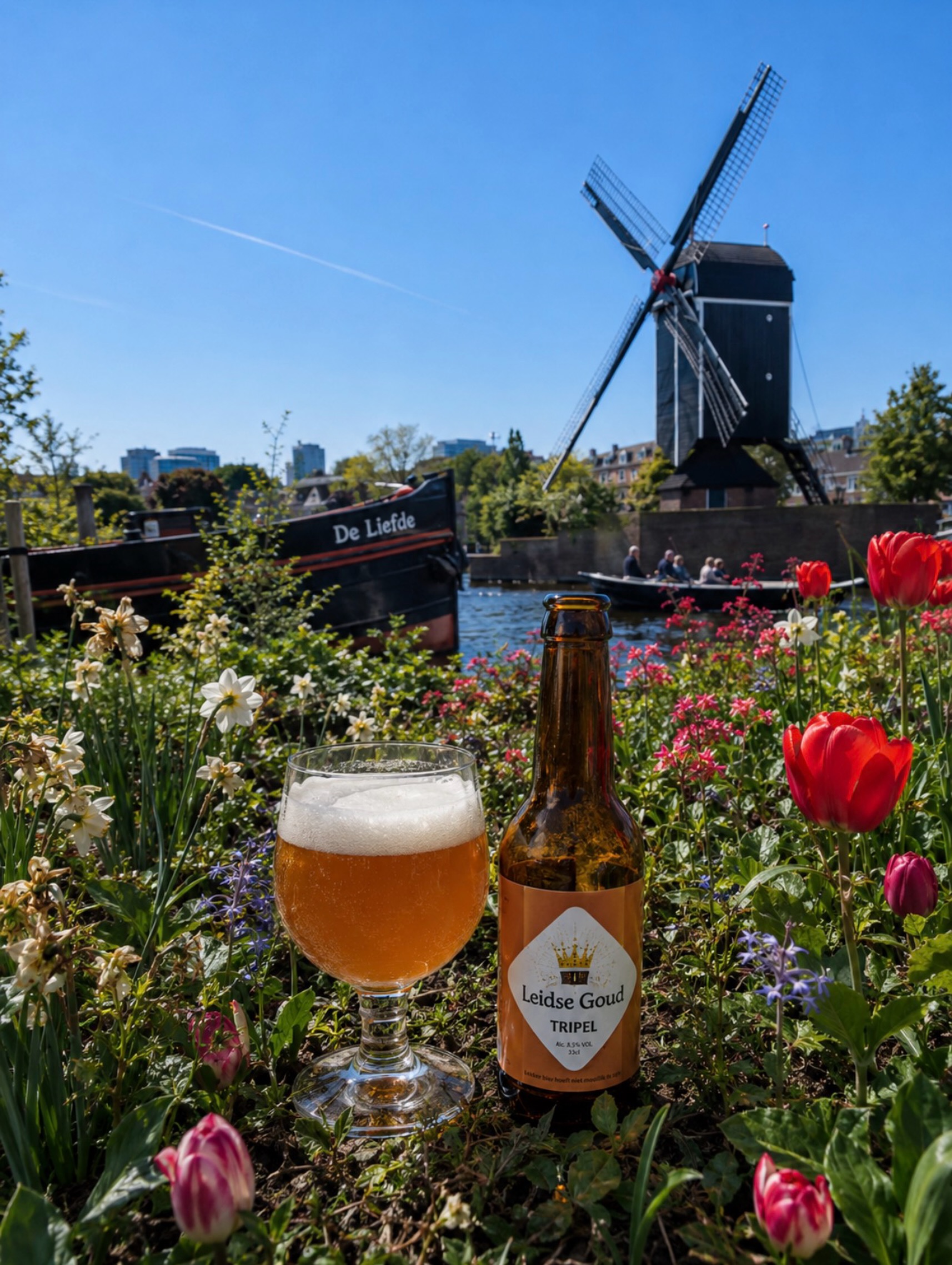
Unlike the word Trappist, those names are not protected. Any brewer is allowed to make a Tripel, and this is happening extensively. The Leidse Goud Tripel It relies on a Belgian abbey yeast for its fruity and spicy aroma, with added coriander. Below, you can see it among the tulips.
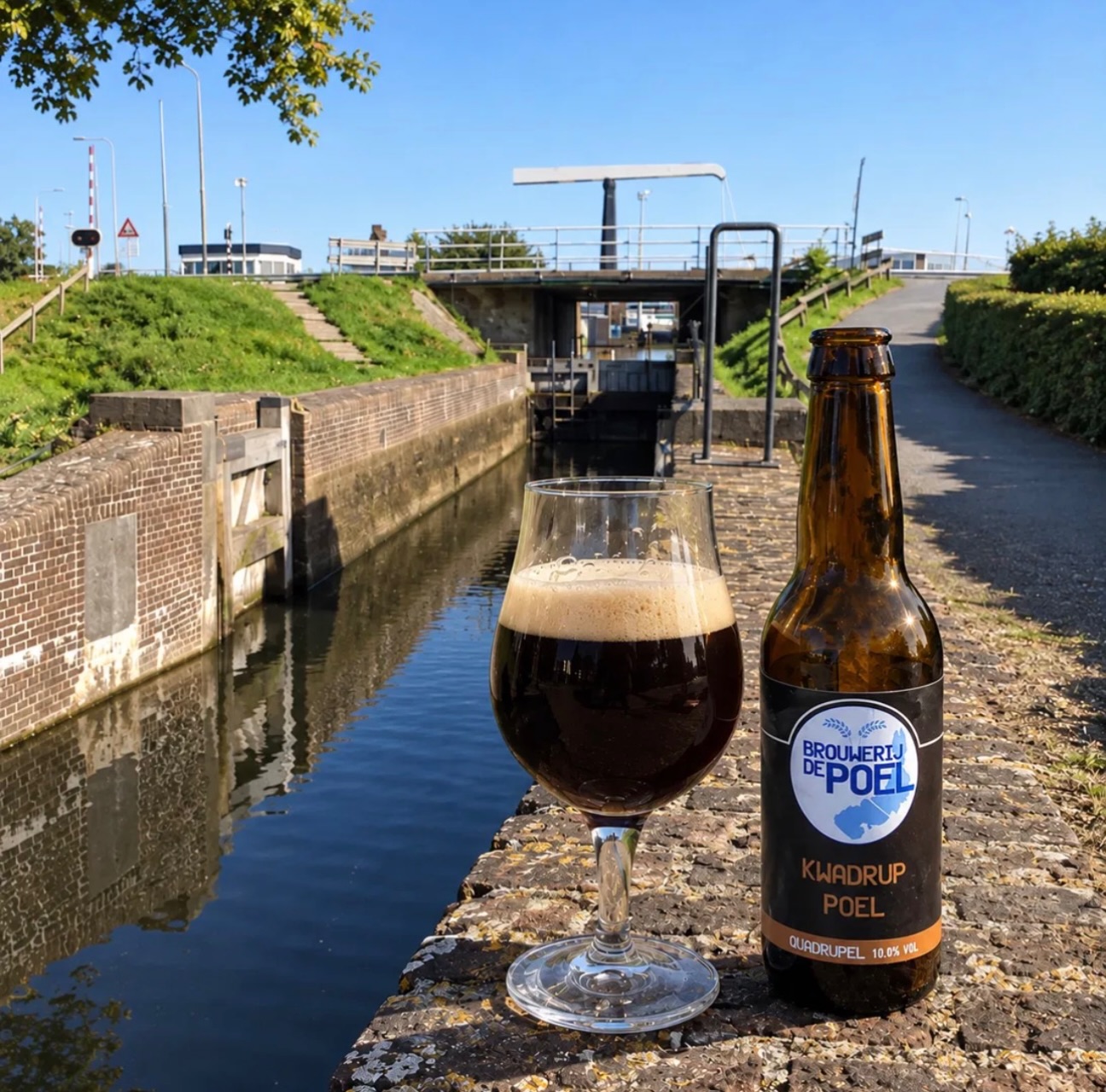
On the dark side stands the Kwadrup Poel from Brouwerij De Poel from Langeraar. Dark malts, cane sugar, and candy sugar give this quadrupel a thick layer of caramel. In the photo below, it is standing at the Papenveer lock.
And then there is the Trappist beer.
Not everything monks brewed was heavy. The Patersbier, also called Enkel, was originally a lighter beer that the monks themselves drank. Tuindersbier van Bospolder Brouwerij is inspired by that: lightly fruity, noticeably bitter, and made to be drunk, not to impress.
Unsure in the store? Look for the Authentic Trappist Product label. If it only says Abbey or Tripel, then you have an abbey beer or a monastery-style beer. That says nothing about the quality, but it does say who was at the brewing kettle.
We do not sell Trappist beers ourselves, but we do sell beers that build on that monastic tradition. Take a look at our triples and at the doubles and quadruples. Cheers, to the monks of Westmalle and the Benedictines of Egmond.