


Beer on wood: what a barrel does to your beer
Why would a brewer leave a beer that is essentially ready sitting in an old whisky barrel for months? Because wood does something that no steel tank can. It imparts flavor, it lets a little air through very slowly, and it carries along the memory of everything that was inside before.
What the wood does to your beer
Oak wood is full of substances that slowly infuse into the beer. Vanillin imparts a soft vanilla note, lactones are reminiscent of coconut, and other compounds from toasted wood bring caramel and toasted bread. Additionally, tannins are released—the tannins you also know from red wine. These provide some balance to a heavy, sweet beer.
Moreover, wood is not completely sealed. Oxygen reaches the beer in small amounts through the pores, which rounds off any sharp edges. This happens slowly: a beer can age in a barrel for a few months to a few years.
Funnily enough, brewers used to actually avoid that woody taste. In large parts of Central Europe, wooden lagering barrels were coated with pitch on the inside so that the beer would not taste like oak.
For centuries, wood was simply the vessel everything went into, including beer. Until well into the twentieth century, most beer arrived at the pub in heavy oak barrels.
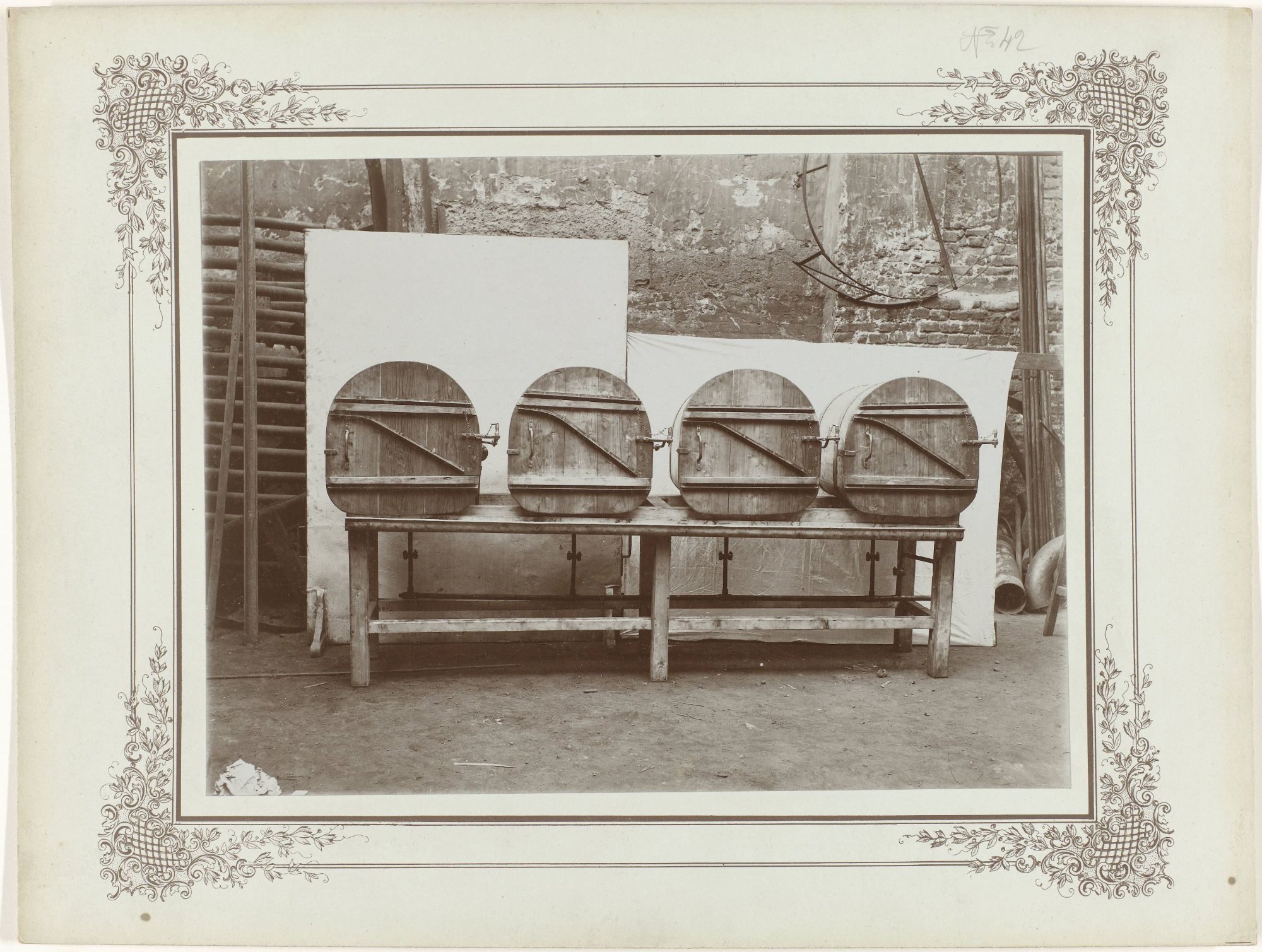
After the Second World War, stainless steel took over, as it is lighter and much easier to clean. Wood never completely disappeared, however. At Pilsner Urquell, a portion of the beer is still aged in oak barrels in the brewery's cellars.
The barrel remembers what was inside.
Most barrels at brewers have already had a life. By law, American bourbon must age in a new barrel, so the used barrels go on to other distilleries and brewers. The wood then still contains whiskey, port, or gin, which leach out into the beer.
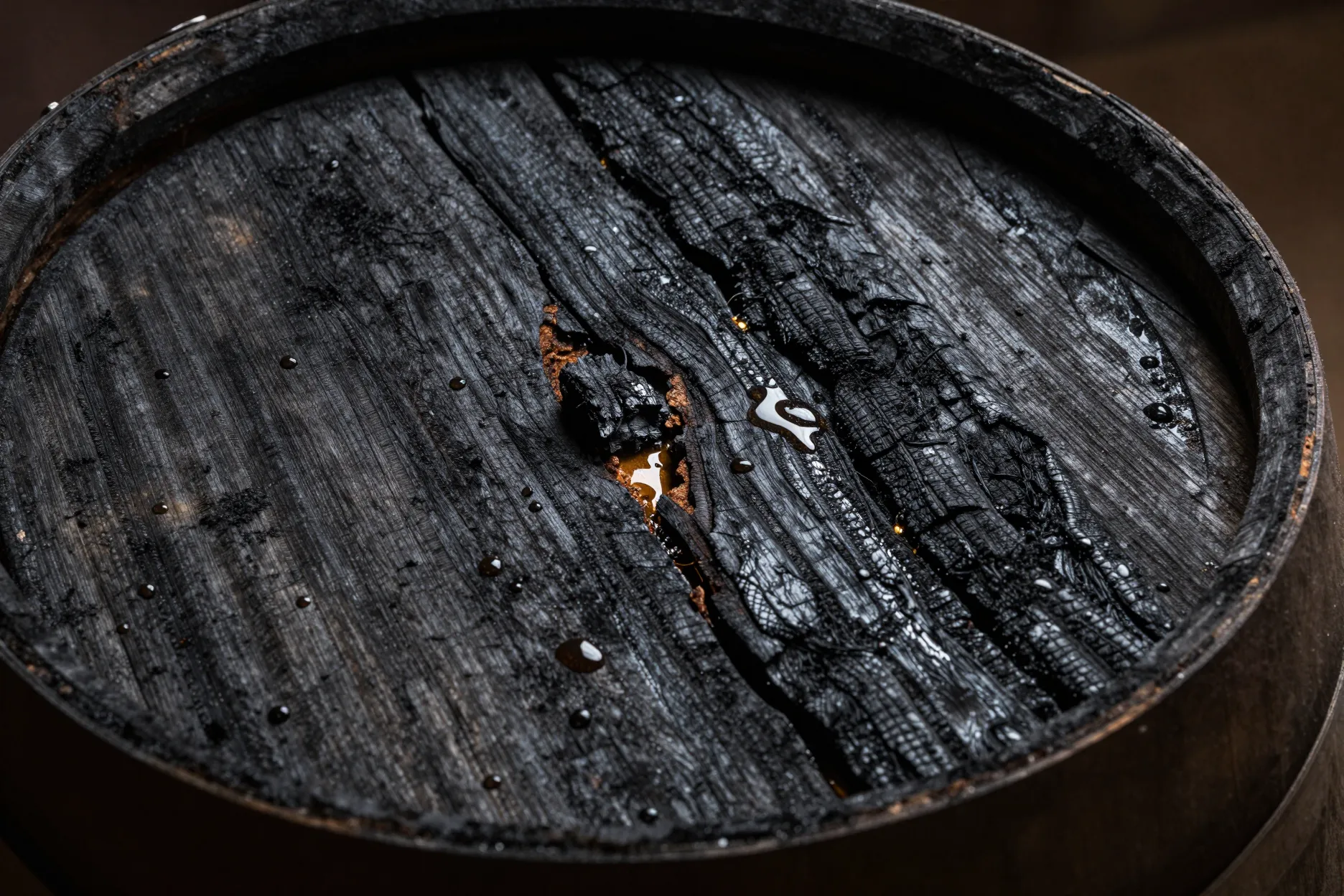
Each type of barrel leaves its own mark. The charred wood of a bourbon barrel imparts a smoky note alongside vanilla, and a trace of bourbon provides a warm, alcoholic tone. A barrel that held red wine can give the beer a pinkish glow and a hint of berries. And a Scotch whisky barrel with plenty of peat brings malt and smoke.
You can really taste that in the Killer Queen of PopHop, a dark 8 percent tripel that spent over nine months in a Caol Ila whisky cask. That distillery on the Scottish island of Islay makes peaty whisky, and that smokiness is now in a tripel. Bello did something similar with Dutch jenever: the imperial saison Costa Pacifica ’25 (9.6 percent) matured in an oak gin cask from Distilleerderij Rutte in Dordrecht.
No barrel, but wood.
A whole barrel is expensive and requires patience. That is why many brewers work with loose pieces of wood in the tank: chips, blocks, or staves. The smaller the pieces, the more wood comes into contact with the beer and the faster the flavor penetrates. Be careful, however, as leaving it for too long can quickly make a beer too woody.
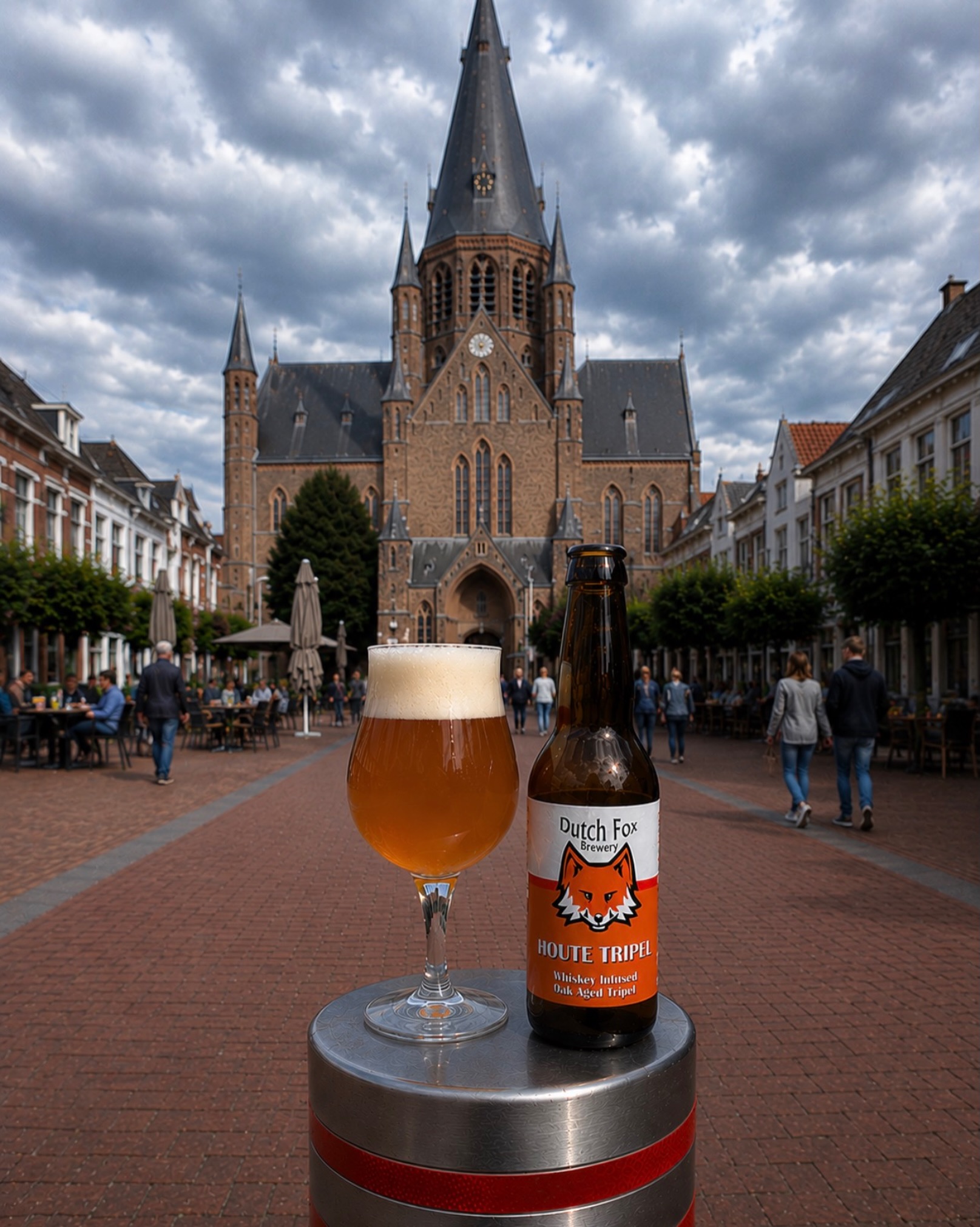
The Painted Black by PopHop is a good example of that: a 10 percent stout that aged on oak chips for five weeks, soaked in Scotch whisky. The Houte Tripel from Dutch Fox (9.5 percent) matured on oak chips that had been soaked in whiskey, and in their quadrupel Porto Quatro (10.6 percent) oak and port combine to create raisin and chocolate.
It doesn't always have to be oak, either. Beun Brewing lagered the Tripel Snipperdag (9.5 percent) on cherry wood, and those soft wood tones do the work there that spices in other triples doing.
Acidic and wild: here the wood is allowed to live.
With sour and wild beers, a brewer wants more than just the taste of the wood. Wild yeasts and bacteria settle in the staves of a barrel, and scrubbing them out will not remove them. For a lambic brewer, that is exactly the intention.
With lambic, the hot wort cools down overnight in an open cooling vessel, where wild yeasts and bacteria from the air fall into it. The next morning, the beer goes into oak barrels, where it matures for at least a year. Brettanomyces, a slow-acting wild yeast, and that long time on wood give it its deep flavor.
Because the carbon dioxide escapes through the wood, lambic itself is flat. If you mix young and old lambic and bottle it, it continues to ferment in the bottle and becomes a sparkling gueuze.
Rodenbach in West Flanders also lets the wood do that work, and on a large scale. In the cellars stand nearly three hundred gigantic oak foudres, some more than 150 years old. The beer matures in them for up to two years, and the microbes in the wood make it acidic and fruity. Mixed with young beer, this becomes the famous Flemish Red.
This is how you get the most out of a wood-aged beer
These are not beers to gulp down quickly on a warm afternoon. Do not serve them ice-cold: for most of these beers, we recommend around 10 degrees on the product page. Choose a glass with some room for the aroma, smell first, and take your time.