
The brewing process: four steps from malt to beer in your glass
Cracking open a beer takes a few seconds. Making it takes weeks, and goes through a few fixed stages along the way: the mash tun, the boiling kettle, the fermentation vessel, and finally the bottle. We take you along that route, equipment and all.
Mashing: from crushed malt to sweet liquid
Everything starts in the mash tun, a large insulated kettle in which crushed malt is mixed with water at an ever-increasing temperature, usually somewhere between sixty and seventy-five degrees. The result is not sludge, but a thick, oat-like mash: exactly what you see bubbling in the tun in the photo above. At the lower end of that temperature scale, many fermentable sugars are released, resulting in a drier, tighter beer. Higher up on that scale, more body remains. It is precisely that dry, tight edge that you hear reflected in the Schwarzbier from Bospolder Brouwerij: pitch black in the glass, but surprisingly light on the finish. After resting for a few hours, the mash is filtered, and what remains is called wort: a sweet, malty liquid that is not yet a trace of beer.
Boiling and hopping: where bitterness and aroma originate
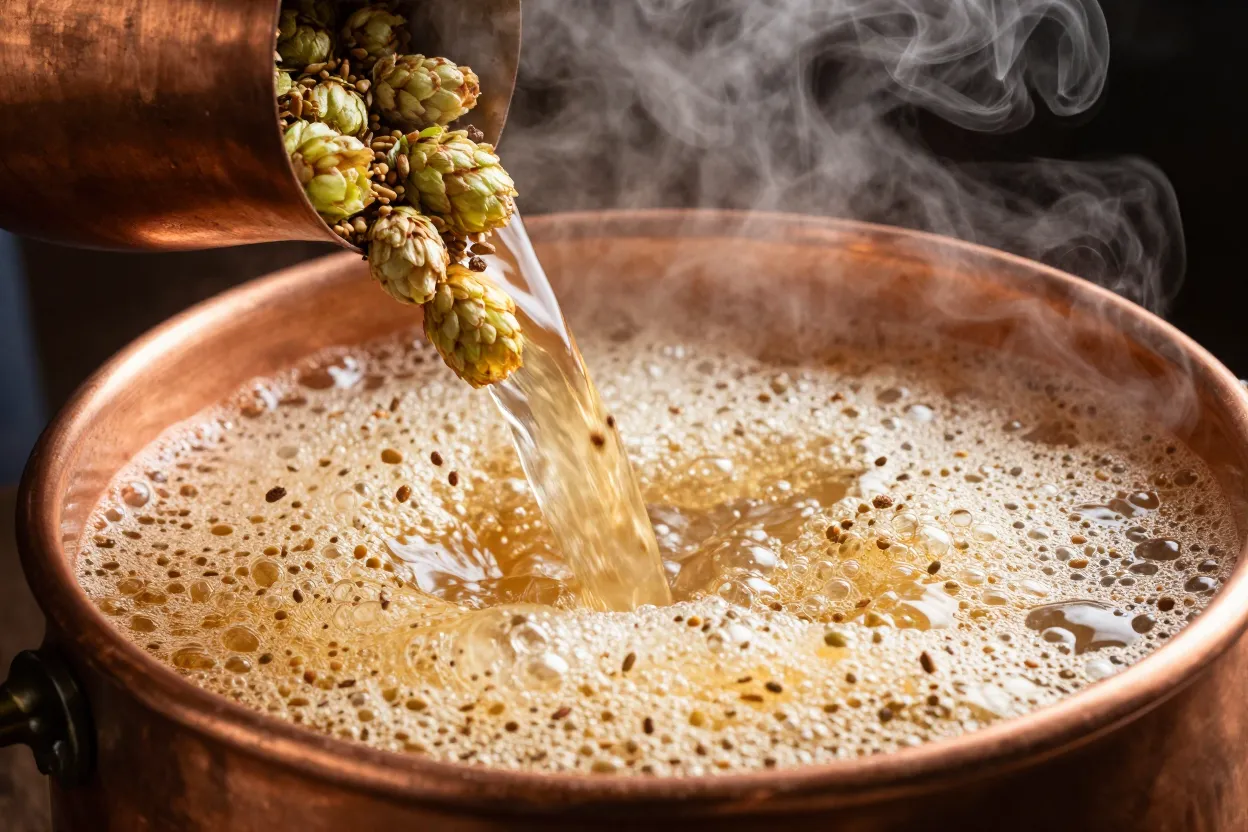
The wort is then boiled for about sixty to ninety minutes in a large copper or stainless steel kettle. Hops added early boil the longest and primarily impart bitterness. Hops added only at the end, on the other hand, retain their aroma and flavor, as shown in the photo below where the hops enter the boiling wort. This late hop addition is precisely why a cloudy IPA can smell so explosive: the Ons Gabbertje Neipa of Struuk Bier owes its juicy, tropical aroma to hops that are added only at the very end of the boil, rather than to a long boiling time.
Fermentation: the moment when yeast takes over
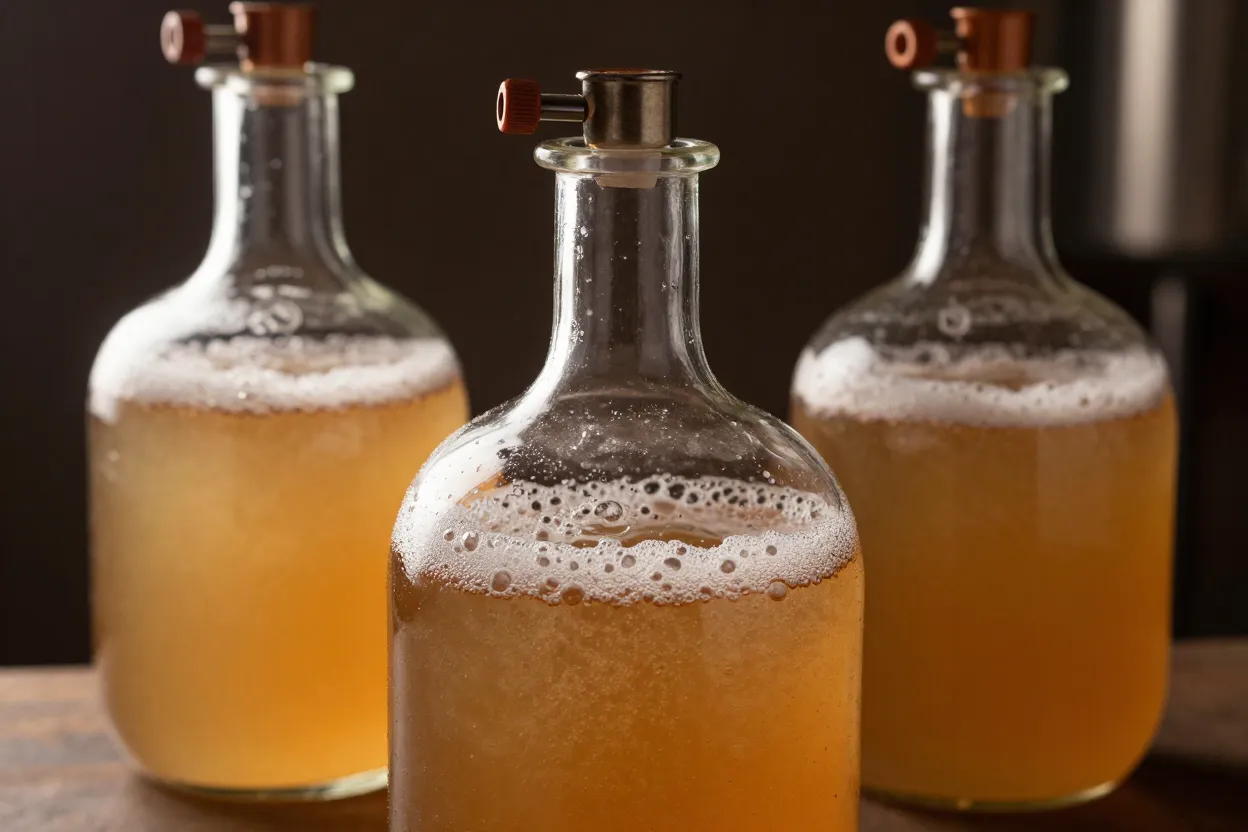
After boiling, the wort is quickly cooled and transferred to a fermentation vessel, such as the glass balloons in the photo below, and yeast is added. Then the real work begins. With warm, rapid fermentation, at around eighteen to twenty-three degrees, most ales are produced within a few days to weeks, such as a crisp blond beer like the Old Zeeland Garage Bier from Beun Brewing. Cold, slow fermentation, on the other hand, takes weeks and produces the tighter lager family. A robust Belgian Tripel, such as the Poldergoud of Bospolder Brouwerij, is given just a little more time and depth due to its higher alcohol content and longer maturation.
Bottling and maturation: the final step before it arrives at your doorstep
Before the beer goes into the bottle, a small amount of sugar is often added. This triggers the remaining yeast to get to work one last time in the bottle, creating natural carbonation. With a strong beer with a high alcohol percentage, such as the Fortress of the Knight Smoked Stout from Yeasterday Brewing With its ten percent, a few extra weeks of rest in the bottle also does the taste itself good: the smoke and caramel get time to blend together before it reaches your table.
Four stations, and yet every beer is different. That is exactly what makes every bottle in our shop worth tasting.